Space Mood Glass Text Effect for Sci-Fi Designs
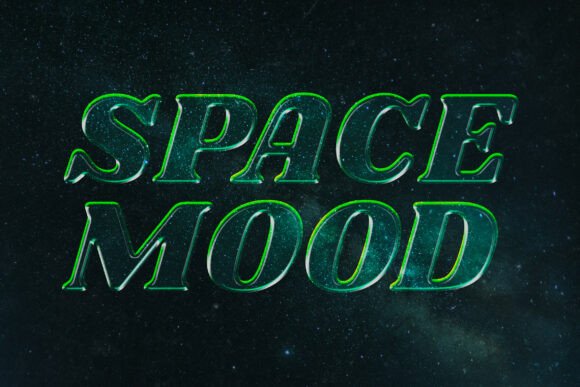
Capturing the essence of futuristic technology in graphic design often requires balancing high-tech aesthetics with readability. The Space Mood Glass Text Effect achieves this by combining transparent glass lettering with a subtle neon green glow, creating a visual that feels both advanced and accessible. Unlike heavy metallic textures or overly complex cyberpunk overlays, this effect relies on lightness and luminosity to convey a cosmic atmosphere. For designers working on sci-fi projects, tech branding, or digital art, this style offers a clean yet striking way to make headlines float as if suspended in zero gravity.
Defining the Aesthetic: Transparency Meets Neon
The core strength of the Space Mood Glass Text Effect lies in its material simulation. It mimics the physical properties of polished glass, complete with smooth reflections and glossy highlights, but places it within a dark, spatial context. The transparency allows background elements—whether they are starfields, circuit board patterns, or abstract gradients—to remain partially visible through the letters. This creates genuine depth rather than just layering text on top of an image.
The neon green accent serves a specific functional purpose beyond decoration. Green is universally associated with active systems, data streams, and "go" signals in interface design. When applied as a soft glow against the glass edges, it provides necessary contrast against dark backgrounds without the harshness of pure white light. This combination results in a modern space mood that feels energetic but controlled, avoiding the visual noise that often plagues futuristic typography.
Practical Applications Across Creative Fields
Versatility is essential for any design asset, and this text effect adapts well to various professional and creative environments. Its clean lines and legible form factor make it suitable for more than just movie posters.
- Tech Branding and SaaS: Startups and software companies often need to communicate innovation without looking dated. The glass texture suggests clarity and modern UI principles, while the neon hint adds a touch of cutting-edge energy perfect for landing pages or app icons.
- Gaming Visuals and Esports: From Twitch overlays to tournament banners, gaming graphics demand high impact. This effect provides a cohesive look for team names or event titles that aligns with popular sci-fi and shooter genres without obscuring gameplay footage in video content.
- Music Covers and Event Promotion: Electronic, synthwave, and ambient music artists benefit from visuals that match their sonic texture. The floating quality of the text complements atmospheric audio, making it ideal for Spotify canvases, SoundCloud headers, and festival lineups.
- Educational and Editorial Content: Science educators and tech bloggers can use this style to create engaging thumbnails or section headers. It signals to the audience that the content is forward-looking and relevant to current technological discussions.
Enhancing User Experience Through Visual Hierarchy
Beyond aesthetics, the Space Mood Glass Text Effect supports effective communication. In digital design, users scan content quickly. Heavy, opaque text blocks can sometimes feel like barriers, especially on dark-themed websites or apps. Transparent glass lettering reduces visual weight, allowing the eye to move smoothly across the composition.
The subtle glow also acts as a natural focal point. Because human vision is attracted to light sources in dark environments, the neon green edges guide attention exactly where it needs to go. This is particularly valuable in social media graphics where you have only seconds to capture interest. By using this effect for key messages or calls to action, you leverage optical physics to improve engagement rates naturally.
Workflow Efficiency and Customization
Creating realistic glass effects from scratch involves complex layer styles, masking, and lighting adjustments that can consume hours of production time. This resource streamlines that process significantly. The included PSD file features fully editable text effects, meaning you can simply type your own content and retain all the intricate styling automatically.
This efficiency does not come at the cost of flexibility. Because the effect is built using standard Photoshop smart objects and layer styles, experienced designers can still tweak parameters. You might adjust the opacity of the glass to show more background detail, shift the neon hue to match a specific brand color palette, or modify the bevel settings to change how light interacts with the letterforms. The accompanying TXT file provides essential font and photo information, ensuring you can replicate or expand upon the original look without guessing.
Considerations for Implementation
While the Space Mood Glass Text Effect is highly adaptable, getting the best results requires some contextual awareness. Glass effects rely heavily on contrast to be visible. Placing transparent text over a mid-tone gray or busy, multi-colored photograph may cause legibility issues. Always ensure there is sufficient tonal difference between the text area and the immediate background.
Font selection also plays a critical role. This effect works best with sans-serif typefaces that have consistent stroke widths and geometric proportions. Serif fonts or highly decorative scripts can sometimes distort the glass simulation, making the reflections look unnatural. Stick to clean, modern typefaces to maintain the intended futuristic integrity.
Additionally, consider the output medium. For web and screen use, the neon glow will appear vibrant due to backlighting. However, if you plan to use this design for print materials like business cards or merchandise, remember that paper does not emit light. You may need to increase the brightness of the glow or add a slight drop shadow to compensate for the lack of screen luminance, ensuring the glass effect translates effectively to physical formats.
Why Minimalist Futurism Matters Now
Design trends are currently shifting away from maximalist cyberpunk toward cleaner, more refined interpretations of future tech. Audiences are becoming fatigued by cluttered visuals. The Space Mood Glass Text Effect sits perfectly in this transition zone. It retains the excitement of science fiction but presents it through a lens of sophistication and usability.
For professionals and creators, adopting this style signals an understanding of contemporary visual language. It shows that you value both atmosphere and function. Whether you are designing a presentation deck for a tech conference, creating assets for a new video game, or simply upgrading your personal portfolio, this text effect provides a polished foundation. It transforms ordinary words into immersive visual experiences, helping your work stand out in an increasingly crowded digital landscape.