Evaluating the Modern Text Effect Editable Font Style for Professional Design
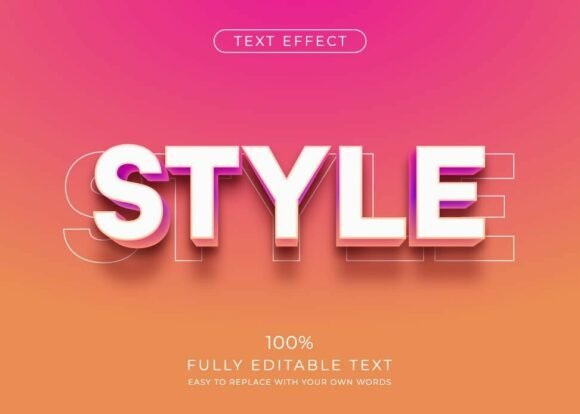
In the current landscape of digital and print design, typography often serves as the primary anchor for visual hierarchy. While standard typefaces provide necessary readability, headline treatments frequently require additional dimension to capture attention without sacrificing legibility. The Modern Text Effect Editable Font Style addresses this specific need by offering a meticulously carved 3D extruded design that remains fully editable. Unlike rasterized images or complex 3D renders that lock text into a static state, this resource functions as a dynamic tool within standard vector and layout software. For professionals managing high-volume creative output, the ability to apply sophisticated depth and shadow effects while retaining the flexibility to adjust kerning, tracking, and content is a significant workflow advantage.
Technical Construction and Visual Characteristics
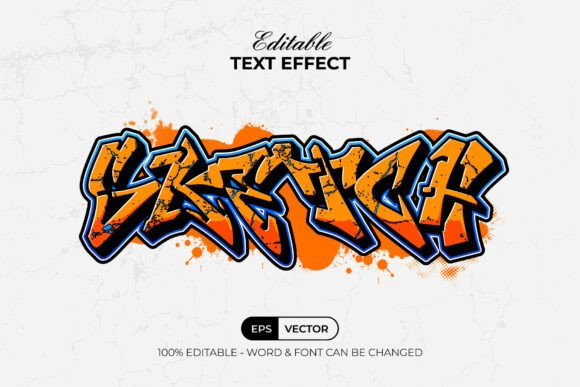
The defining characteristic of this asset is its balance between aesthetic complexity and technical cleanliness. Many pre-made text effects suffer from poor geometry, resulting in jagged edges when scaled or awkward artifacts when the text is modified. This Modern Text Effect Editable Font Style distinguishes itself through precise vector construction. The 3D extrusion is not merely an applied layer style but appears integrated into the form, creating a sense of tangible volume. The "carved" aesthetic implies negative space and lighting interaction that goes beyond simple drop shadows, suggesting a physical presence that flat typography cannot achieve.
From a production standpoint, the editability factor is paramount. When working with this style, designers can typically modify the source text without breaking the effect mapping. This is achieved through smart object linking or live font replacement features, depending on the host application. The extrusion depth and lighting angles are generally consistent across different character widths, ensuring that a single letter 'i' carries the same visual weight and stylistic integrity as a wider 'm'. This consistency is crucial for maintaining professional standards in branding projects where typographic uniformity dictates perceived quality.
Practical Applications in Commercial Workflows
The utility of this text effect extends across various commercial verticals. Its sleek sophistication makes it particularly suitable for industries that rely on premium positioning. In real estate marketing, for example, property names and development titles benefit from the architectural solidity implied by the 3D extrusion. Similarly, tech startups and SaaS companies often utilize this style to convey innovation and structural stability in landing page headers and pitch decks. The effect adds a layer of polish that suggests a higher budget allocation, even when executed quickly by a solo freelancer or small agency team.
For social media managers and content creators, the editable nature of this font style solves a persistent bottleneck. Creating custom 3D typography for every Instagram story or LinkedIn banner is time-prohibitive. By utilizing this Modern Text Effect Editable Font Style as a master template, creators can swap out messaging daily while maintaining a cohesive visual identity. The depth of the extrusion also aids in accessibility and contrast; when placed against busy photographic backgrounds, the dimensional separation helps the text remain distinct and readable, reducing the reliance on heavy background overlays that can obscure imagery.
Integration with Brand Identity Systems
When incorporating stylized text into a broader brand system, restraint and context are essential. This effect works best as an accent rather than a body copy solution. It pairs effectively with clean sans-serif or minimalist serif typefaces, allowing the 3D element to serve as a focal point without overwhelming the layout. Designers should consider the emotional tone of the extrusion; the sleek, modern carving suggests precision and forward-thinking attributes. It may be less appropriate for brands emphasizing organic warmth, heritage craftsmanship, or playful informality. Evaluating the alignment between the effect’s inherent mood and the brand’s core values prevents stylistic dissonance.
Assessing Usability and Software Compatibility
A critical evaluation metric for any design asset is how seamlessly it integrates into existing workflows. The Modern Text Effect Editable Font Style is generally optimized for industry-standard platforms like Adobe Photoshop, Illustrator, and increasingly, Figma. However, users must verify the specific file formats provided. Vector-based versions (AI, EPS, SVG) offer superior scalability for large-format printing and responsive web design, while PSD-based smart objects provide more granular control over lighting and texture at the cost of resolution independence.
Usability also encompasses the learning curve associated with customization. While marketed as editable, some users may encounter friction if they are unfamiliar with smart object nesting or vector path manipulation. High-quality assets include documentation or layer organization that makes navigation intuitive. Well-labeled layers, color-coded groups, and non-destructive adjustment layers indicate a product designed by professionals for professionals. If modifying the text requires rebuilding the effect from scratch, the "editable" claim loses its practical value. Therefore, testing the modification process before committing to a project deadline is a recommended best practice.
Performance Considerations and Limitations
Despite its strengths, this type of stylized typography carries inherent limitations that practitioners must acknowledge. File size is a primary concern; complex 3D extrusions with multiple layer styles can significantly bloat document sizes, potentially slowing down rendering times and collaboration. In web environments, using this effect as a live font is rarely feasible due to performance constraints. Instead, it is usually implemented as optimized SVG or WebP imagery. This means the text is not selectable or indexable by search engines unless proper alt text and semantic HTML structures are employed.
Furthermore, the "modern" aesthetic has a shelf life. While currently aligned with contemporary design trends favoring depth and tactility, highly stylized effects can date a design faster than neutral typography. Professionals should assess whether the project requires timeless longevity or trend-responsive immediacy. For evergreen corporate reports or legal documents, this effect may be too decorative. For event promotions, product launches, or seasonal campaigns, its impact is maximized precisely because it feels current and fresh. Understanding this temporal distinction ensures the asset is deployed strategically rather than ubiquitously.
Quality Control and Output Standards
When evaluating specific iterations of the Modern Text Effect Editable Font Style, scrutinize the edge quality and shadow rendering. Poorly constructed effects often exhibit pixelation along curved edges or banding in gradient shadows. These flaws become glaringly obvious in print production or high-resolution displays. Additionally, check the licensing terms carefully. Some editable font styles restrict commercial use or limit the number of end products. Ensuring compliance protects both the designer and the client from future legal complications. A reliable asset provider will offer clear, unambiguous licensing that supports professional freelance and agency work.
Determining Value for Specific User Segments
The return on investment for this tool varies significantly based on user role and project frequency. For full-time graphic designers and art directors, owning a robust library of editable text effects reduces billable hours spent on repetitive styling tasks, directly improving profitability. For marketers and entrepreneurs who handle their own design, the value lies in achieving agency-level aesthetics without hiring external talent. The Modern Text Effect Editable Font Style bridges the gap between amateur flat text and expensive custom 3D illustration.
Educators and presenters may find selective use beneficial for title slides and section dividers, helping to maintain audience engagement through visual variety. However, they should avoid applying such heavy styling to informational slides where cognitive load must be minimized. Small business owners producing packaging or signage will appreciate the tangible quality the extrusion adds, which can elevate perceived product value on retail shelves. Ultimately, the decision to adopt this style should be driven by specific communication goals rather than novelty. When the objective is to project sleek sophistication and modern competence, and when workflow efficiency is a priority, this editable font style proves to be a highly functional component of the professional design toolkit.
Successful implementation requires treating the effect as a structured design element subject to the same rigorous standards as any other typographic choice. By understanding its technical parameters, respecting its aesthetic boundaries, and leveraging its editable capabilities responsibly, professionals can transform standard text into compelling visual assets that enhance rather than distract from the core message. The true measure of this tool’s worth is not just in its initial visual impact, but in its sustained utility across diverse projects and its ability to adapt to evolving creative demands without compromising quality or efficiency.