Strategic Implementation of Printable Pantry Labels 1 for Functional Kitchen Organization
Effective home management relies heavily on visual systems that reduce cognitive load and streamline daily operations. Printable Pantry Labels 1 serves as more than a decorative element; it is a functional tool designed to establish order, enhance inventory visibility, and create a cohesive aesthetic environment. For professionals, entrepreneurs, and household managers seeking to optimize their domestic infrastructure, these elegant vintage-inspired labels offer a practical solution to the common friction points of kitchen organization. By integrating a standardized labeling system, you transform a chaotic storage area into an efficient resource center that supports meal planning, reduces food waste, and maintains a sense of calm amidst a busy schedule.
The Strategic Value of Visual Standardization
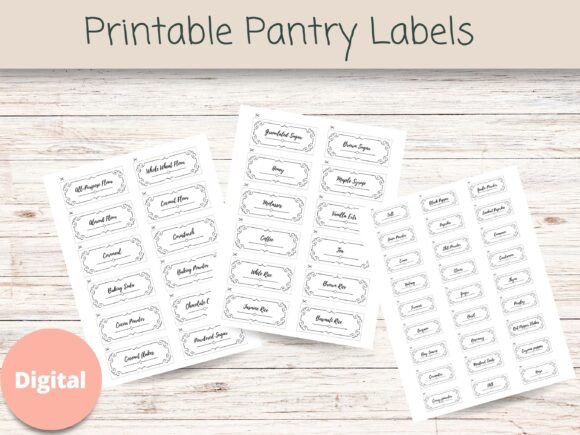
In both business and domestic environments, standardization is key to efficiency. When ingredients are stored in mismatched packaging or unmarked containers, the brain must expend unnecessary energy identifying contents before a task can begin. Printable Pantry Labels 1 eliminates this friction by providing a consistent visual language across your pantry and spice collection. The specific dimensions included in this set—3.16 x 1.35 inches (8 x 3.5 cm) for pantry staples and 0.76 x 1.79 inches (4.5 x 1.95 cm) for spices—are engineered to fit standard glass jars and canisters without overwhelming the container’s form factor.
This level of specificity matters for long-term usability. A label that is too large obscures product levels, making inventory checks difficult. A label that is too small becomes illegible from a distance. The balanced sizing of these printable assets ensures that functionality is not sacrificed for style. Furthermore, the inclusion of both pre-labeled essentials and blank customizable options allows for a hybrid approach. You can maintain uniformity for core items like flour, sugar, and coffee while retaining the flexibility to adapt to seasonal ingredients or specialized dietary needs without breaking the visual system.
Enhancing Productivity Through Intentional Design
Time is a finite resource for any professional or creator. The cumulative time spent searching for spices or guessing whether a white powder is baking soda or cornstarch adds up over weeks and months. Implementing Printable Pantry Labels 1 is a proactive measure to reclaim this lost time. The elegant vintage-style frame and stylish script font serve a dual purpose: they provide high contrast for readability while establishing a sophisticated atmosphere that makes the kitchen a pleasant space to work in.
From an operational standpoint, clear labeling directly impacts meal preparation workflows. When every ingredient has a designated, clearly marked home, the mental bandwidth required for cooking decreases significantly. This is particularly valuable for those who use cooking as a creative outlet or a decompression ritual after high-stakes professional work. The minimalist yet decorative design ensures that the system feels curated rather than industrial, supporting a lifestyle where efficiency and beauty coexist. The high-resolution PDF format guarantees that text remains crisp even at smaller sizes, preventing the frustration of squinting at faded or pixelated printouts during critical moments in the kitchen.
Planning Your Labeling System Before Printing
A common mistake in home organization projects is rushing to execution without adequate planning. Because Printable Pantry Labels 1 is a digital product intended for instant download and home printing, there is a temptation to print immediately. However, strategic implementation requires assessment first. Before utilizing your ink and adhesive, conduct a thorough audit of your current pantry inventory. Identify which items you actually use regularly versus those that are obsolete. There is no value in creating a beautiful label for an ingredient that expires next month or one you rarely touch.
Consider the hierarchy of your storage. Items used daily should be placed at eye level with the most legible orientation. Bulk items stored on higher shelves may require different positioning or additional signage. Use the blank labels included in the set to create category headers for shelving units if necessary. Planning also involves selecting the right physical materials. While the digital files are optimized for quality, the final result depends on your choice of paper and adhesive. Matte vinyl or waterproof sticker paper is often superior to standard paper for kitchen environments where moisture, oil, and frequent handling are factors. Investing ten minutes in material selection prevents the need to reprint and reapply labels within weeks due to wear and tear.
Risk Mitigation and Sustainable Maintenance
Any organizational system carries the risk of becoming unsustainable if it is too rigid or complex. Relying solely on pre-set categories can lead to failure when your habits change. If you switch to gluten-free baking but lack appropriate labels because the set only includes "All-Purpose Flour," the system breaks down. Printable Pantry Labels 1 mitigates this risk through its customizable blank components. Treat the blank labels as a strategic reserve. They allow the system to evolve with your lifestyle, ensuring longevity.
Another risk is aesthetic inconsistency resulting from poor printing calibration. Always perform a test print on plain paper to verify alignment and color accuracy before using premium label stock. Ensure your printer settings are configured to "Actual Size" or "100% Scale" rather than "Fit to Page," as scaling can distort the precise cut lines provided in the file. Misaligned cuts not only look unprofessional but can also make labels difficult to apply smoothly to curved jar surfaces. Taking these technical precautions ensures that the initial investment of effort yields a durable, high-quality result that withstands daily use.
Leveraging Digital Assets for Long-Term Flexibility
The decision to utilize a digital product like Printable Pantry Labels 1 rather than purchasing pre-printed physical labels offers distinct strategic advantages. Ownership of the PNG and PDF files means you have perpetual access to the asset. If you move homes, renovate your kitchen, or simply spill coffee on a jar, you can reproduce the exact label needed without searching for a discontinued retail product. This autonomy is crucial for maintaining consistency over years rather than months.
Furthermore, digital ownership facilitates experimentation. You can test different label placements or groupings without financial penalty. For content creators, bloggers, or influencers in the home and lifestyle niche, having editable or reproducible assets allows for easy updates to photography sets or video backgrounds without incurring recurring costs. The ability to print on demand aligns with lean inventory principles, reducing clutter and waste associated with buying bulk packs of labels you may never fully utilize. This approach reflects a broader mindset of intentional consumption and resource management that resonates with modern professional values.
Integrating Labels into Broader Household Operations
Labels are merely identifiers; their true power emerges when integrated into broader household systems. Use Printable Pantry Labels 1 as the foundation for an inventory tracking method. When applying a new label, consider adding a small, discreet date code on the back or bottom of the jar to track freshness without marring the vintage aesthetic. This practice bridges the gap between visual appeal and food safety compliance. For families or shared households, clear labeling acts as non-verbal communication, reducing questions and delegating responsibility implicitly. Everyone knows where items belong and what they contain, fostering collective accountability.
Additionally, consider how these labels interact with other organizational tools. Do they match your canister lids? Are they visible through open shelving? Cohesion across all elements creates a professional-grade finish that elevates the entire space. The elegant vintage frame of this specific label set pairs exceptionally well with amber glass, ceramic crocks, and natural wood tones. Understanding these design relationships helps you make better purchasing decisions for future storage containers, ensuring that new acquisitions complement rather than clash with your established system.
Making Informed Decisions About Kitchen Infrastructure
Ultimately, adopting Printable Pantry Labels 1 is a decision about prioritizing clarity and intentionality in your personal environment. It signals a shift from reactive chaos to proactive management. Whether you are organizing a commercial-grade prep station for a side hustle or simply streamlining a family kitchen to reduce evening stress, the principles remain the same: identify, categorize, and visualize. The success of this tool depends entirely on your willingness to engage with the process thoughtfully.
Evaluate your current pain points honestly. If your primary issue is expired food, focus on the dating system alongside the labels. If your issue is aesthetic dissatisfaction, prioritize the uniform application and styling. If your issue is time management, focus on the ergonomic placement of labeled goods. By aligning the use of these printable assets with specific, tangible goals, you move beyond simple decoration and achieve genuine operational improvement. The result is a kitchen that functions as a supportive backdrop to your life and work, rather than a source of ongoing maintenance and frustration. Start with a plan, execute with precision, and maintain with flexibility to realize the full strategic value of this elegant organizational solution.