Editable Scan to Pay Template - 06 Design Guide
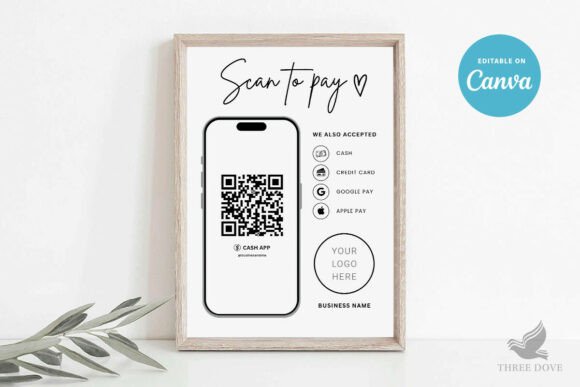
Streamlining the checkout experience is one of the most effective ways to improve customer satisfaction in retail, hospitality, and service environments. The Editable Scan to Pay Template - 06 serves as a functional bridge between physical transactions and digital convenience, offering a clean, professional aesthetic that communicates trust at the point of sale. Unlike generic signage that often looks temporary or unpolished, this specific template utilizes modern typography principles to create a visual hierarchy that guides the eye immediately to the QR code and payment instructions. Its design personality strikes a balance between approachable warmth and transactional clarity, making it suitable for everything from artisan market stalls to established brick-and-mortar boutiques.
The visual character of this template relies heavily on sans serif font choices that prioritize legibility over ornamentation. In the context of payment signage, readability is not just an aesthetic preference; it is a user interface requirement. Customers typically interact with these signs for only a few seconds while holding a phone or wallet. The typeface selected for Editable Scan to Pay Template - 06 ensures high contrast and open letterforms, reducing cognitive load during the payment process. This attention to typographic detail elevates the sign from a mere instruction to a cohesive element of your brand identity, reinforcing professionalism even in casual settings.
Optimizing Typography for Transactional Clarity
When customizing this Canva template, understanding how font weight and spacing influence perception is crucial for maintaining conversion rates. While the template allows for unlimited edits, successful adaptation requires respecting the original design intent. Display fonts or intricate script fonts might align with a boutique’s logo design but often fail in functional signage where speed is essential. Sticking to premium sans serif or clean slab serif options within the template preserves the necessary visual hierarchy. The heading should command attention without shouting, while the instructional text must remain crisp at smaller sizes.
Font pairing plays a significant role when adding additional information, such as accepted payment platforms or minimum transaction amounts. A reliable strategy involves using a bold, geometric sans serif for the primary "Scan to Pay" call-to-action, paired with a lighter weight or neutral humanist sans serif for secondary details. This contrast creates distinct zones of information, allowing customers to scan the sign visually before engaging with it digitally. Avoiding decorative handwritten fonts for critical instructions prevents misinterpretation and maintains the commercial integrity of the transaction point. Remember that what looks artistic on a screen may become illegible when printed at 5x7 inches and viewed from three feet away.
Practical Customization Within Canva
Because this is a strictly digital asset editable only via Canva, users benefit from a streamlined workflow that eliminates software compatibility issues. There is no need to manage layers in Adobe Illustrator or worry about formatting breaks in Microsoft Word. The platform’s intuitive interface allows entrepreneurs and marketers to adjust text color, size, and placement instantly to match existing branding guidelines. When uploading logos or changing background colors, ensure sufficient padding around the QR code itself. Crowding the code with heavy typography or busy patterns can interfere with camera focus and scanning reliability.
- Color Contrast: Always test your chosen color palette against white and black backgrounds. Dark text on light backgrounds generally offers superior readability in varied lighting conditions compared to reverse type.
- Logo Integration: Place brand marks in corners or designated safe zones to avoid competing with the central QR code. The logo should validate the payment destination, not distract from the action.
- Text Hierarchy: Keep primary instructions above the fold. Secondary information like "Thank You" or social media handles should be significantly smaller to maintain focus on the transaction.
- Background Simplicity: If replacing the default background, opt for solid colors or subtle textures. High-contrast photographic backgrounds can reduce QR scannability and text legibility.
The versatility of Editable Scan to Pay Template - 06 extends beyond simple color swaps. Users can add a back side for double-sided table tents or modify the layout for different aspect ratios if needed for social media graphics announcing new payment methods. However, the core strength lies in its standardized 5x7 inch format, which fits standard acrylic holders and frames widely available in office supply stores. This dimensional consistency supports editorial design standards for small business environments, ensuring the signage looks intentional rather than improvised.
Print Production and Real-World Application
Transitioning from digital editing to physical output requires awareness of printer variables. Every printer interprets color profiles differently, and screen brightness often deceives the eye regarding true ink density. Before printing a full batch for a multi-location franchise or event series, produce a single test copy on the intended paper stock. Matte finishes are generally preferable for scan-to-pay signage as they reduce glare from overhead lighting, which can obscure both text and QR codes. Glossy papers, while vibrant, can create hotspots that render the code unreadable from certain angles.
For businesses operating in dynamic environments like pop-up markets or food trucks, durability matters as much as design. Printing on cardstock or synthetic paper ensures the sign withstands handling and environmental factors. The template’s clean lines and modern typography reproduce exceptionally well on various substrates, maintaining sharp edges that pixelated or low-resolution designs cannot achieve. This fidelity reinforces brand perception; a crisp, well-printed sign suggests a secure, well-managed business, whereas blurry text can subconsciously signal technical unreliability.
Commercial licensing and usage rights are inherent to the self-edited nature of this template. Since you are creating the final output yourself, there are no recurring fees or expiration dates on edits. This makes it an economical choice for seasonal updates or rebranding initiatives. Whether updating holiday hours, changing payment processors, or refreshing brand colors, the ability to iterate indefinitely provides long-term value. Just ensure that any uploaded assets, such as proprietary logos or custom illustrations, are cleared for commercial use within your own business operations.
Evaluating Fit for Diverse Business Models
While Editable Scan to Pay Template - 06 excels in retail and hospitality, its utility spans various sectors. Content creators and bloggers selling merchandise at meetups benefit from the professional polish it adds to temporary setups. Service providers like hair stylists or consultants can place discreet versions at reception desks to facilitate seamless billing without awkward verbal exchanges. Even publishers hosting book signings can utilize customized versions to direct readers to mobile payment options for signed copies.
The key to successful implementation is contextual relevance. A minimalist tech startup might prefer the template’s default starkness, while a bakery might soften the palette with warm neutrals and rounded sans serifs. Testing the design in situ before finalizing is always recommended. Observe how customers interact with the sign during peak hours. Do they hesitate? Do they ask for clarification? These observations inform typographic adjustments that improve functionality. Ultimately, the best payment signage is invisible in its effectiveness, facilitating commerce so smoothly that the design itself goes unnoticed, leaving only a positive impression of efficiency and professionalism.