Composition Notebook Cover Canva Template: Strategic Design for Educators and Publishers
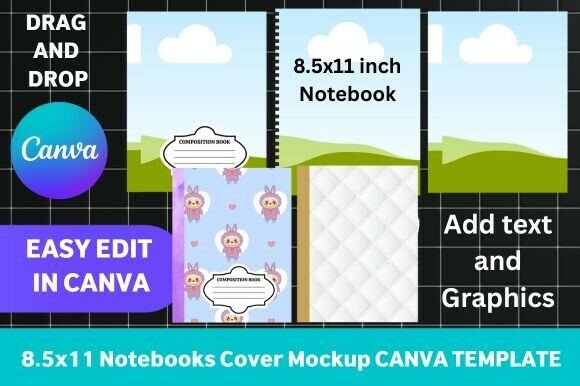
Effective product design in the low-content publishing and educational resource space requires balancing aesthetic appeal with operational efficiency. A Composition Notebook Cover Canva Template serves as more than a decorative starting point; it functions as a strategic asset for entrepreneurs, educators, and digital creators who need to produce high-quality, 8.5x11 notebook covers without the overhead of custom illustration or complex software learning curves. This specific template set, featuring classic marble, modern minimalist, and fun kids-themed styles, addresses distinct market segments while maintaining a standardized production workflow. For professionals managing multiple SKUs on Amazon KDP or teachers preparing classroom materials, the value lies in the ability to maintain brand consistency and reduce time-to-market through editable, pre-sized assets.
Aligning Design Assets with Business and Educational Goals
Before opening a design file, it is necessary to define the strategic purpose of the notebook cover. Randomly selecting aesthetics often leads to disjointed product lines or ineffective classroom branding. The three included styles in this Composition Notebook Cover Canva Template set correspond to specific user intents and market positions. Understanding these distinctions allows for intentional decision-making rather than reactive designing.
The Classic Marble style targets the professional and adult learner demographic. This aesthetic signals sophistication and durability, making it suitable for journals, planners, or premium composition notebooks sold to professionals. In a KDP context, marble patterns have enduring search volume but require differentiation through typography and color grading to avoid saturation. For educators, this style works well for teacher planners or administrative logs where a polished appearance supports professional identity.
The Modern Minimalist option prioritizes clarity and cognitive ease. From a user experience perspective, minimalist covers reduce visual noise, which can be particularly effective for students with sensory processing sensitivities or for brands that emphasize focus and organization. Strategically, this style offers the highest versatility. It serves as a neutral canvas for strong typographic hierarchy, allowing sellers to test various niches—from gratitude journaling to technical note-taking—without redesigning the base asset. For teachers, minimalism facilitates quick visual categorization of subjects when using color-coding systems.
The Fun Kids-Themed style addresses engagement and emotional connection. In educational settings, cover art can influence a student’s willingness to interact with the material. Bright colors and playful elements signal safety and creativity. For digital sellers, this category is highly seasonal and trend-dependent. Success here relies on aligning the template’s customizable elements with current educational trends or seasonal demands, such as back-to-school themes or holiday-specific motifs, rather than relying solely on generic clipart.
Operational Efficiency and Brand Consistency
One of the primary risks in digital product creation is scope creep and inconsistent branding. When creating multiple notebook variations, manually adjusting dimensions or sourcing new backgrounds for each SKU introduces error and consumes valuable time. Utilizing a unified Composition Notebook Cover Canva Template system mitigates these operational friction points.
Because these templates are pre-formatted for 8.5x11 composition notebooks, they eliminate the guesswork regarding bleed, trim, and safe zones. This technical compliance is critical for KDP sellers, where rejection due to formatting errors can delay revenue and damage account standing. By locking in the structural parameters, creators can focus their cognitive resources on market research and keyword optimization rather than pixel measurement.
Furthermore, the editable nature of the background, title, font, and colors supports scalable brand building. Entrepreneurs can establish a proprietary look by standardizing font pairings and color palettes across all three styles. For example, a brand focusing on holistic education might use the same serif typeface and earth-tone palette across the marble, minimalist, and kids’ templates. This creates a cohesive product ecosystem where customers recognize the brand regardless of the specific style they purchase. Teachers benefit similarly by creating a unified classroom visual identity, where student notebooks, teacher planners, and communication logs share a common design language, reinforcing organizational culture.
Customization as a Differentiation Strategy
Access to a template is not a competitive advantage; how you modify it is. The marketplace is replete with unmodified Canva templates. To achieve long-term results, users must approach customization strategically. Changing the background color is the baseline; true differentiation involves layering unique value propositions onto the existing framework.
- Typography Hierarchy: Adjust font sizes and weights to improve readability at thumbnail size. On Amazon, the cover must be legible at 100 pixels wide. Test your modified Composition Notebook Cover Canva Template at small scales before finalizing.
- Niche-Specific Subtitles: Use the editable text fields to target long-tail keywords. Instead of a generic "Notebook," specify "Science Lab Journal for 5th Grade" or "Daily Meal Prep Tracker." This aligns the design with search intent.
- Color Psychology: Align color choices with the notebook's function. Blue promotes calm and focus for study journals; yellow stimulates energy for creative writing; green suggests growth for habit trackers. Avoid choosing colors based solely on personal preference.
- Texture Overlay: Add subtle grain or paper texture overlays within Canva to give digital designs a tactile quality. This increases perceived value and distinguishes the product from flat vector competitors.
Risk Mitigation and Licensing Awareness
While templates accelerate production, they introduce specific risks that require proactive management. The most significant risk for KDP sellers is content duplication. If thousands of sellers use the exact same marble background and font arrangement, Amazon’s algorithms may flag the books as duplicate content, suppressing visibility or blocking publication.
To mitigate this, treat the Composition Notebook Cover Canva Template as a foundation, not a final product. Significant modification is mandatory for commercial viability. This includes altering element placement, combining multiple template elements, or integrating original graphics. Documenting your creative process can also serve as evidence of originality if challenged by platform support teams.
Licensing compliance is another critical consideration. Users must verify Canva’s current licensing terms regarding template usage for print-on-demand products. Generally, standalone template elements cannot be resold as digital assets; they must be incorporated into a new, flattened design. Understanding these boundaries protects your business from legal exposure and platform bans. Always review the specific license agreement associated with your Canva subscription tier before listing products for sale.
Practical Implementation for Diverse User Groups
The application of this template set varies significantly based on the user’s end goal. Recognizing these distinct workflows ensures the tool is used effectively rather than generically.
For Digital Sellers and KDP Publishers
Your primary metric is conversion rate. Use the template to facilitate rapid A/B testing. Create three versions of the minimalist cover with different title treatments or subtitle hooks. Publish them as separate listings or use Amazon Ads to test click-through rates. The low marginal cost of producing variations with a Composition Notebook Cover Canva Template makes data-driven iteration feasible. Additionally, ensure your interior content matches the promise of the cover. A sophisticated marble cover paired with a low-quality lined interior creates cognitive dissonance that leads to negative reviews.
For Educators and School Administrators
Your primary metric is utility and student engagement. Prioritize functionality over trendiness. When customizing the kids-themed style, consider involving students in the selection process or leaving space for them to add their own name tags or doodles. This fosters ownership. For department-wide adoption, create a master brand kit within Canva using the template’s color and font settings. This allows any teacher to generate compliant, on-brand covers in minutes without needing design expertise, ensuring consistency across grade levels while reducing individual prep time.
For Freelancers and Service Providers
Notebooks can serve as lead magnets or client onboarding tools. A real estate agent might use the minimalist template to create branded closing gift journals. A therapist might use the marble style for client reflection worksheets. In these cases, the cover communicates professionalism and care. Ensure the customization aligns with your broader service branding. The notebook should feel like an extension of your website and marketing materials, reinforcing trust and recall.
Making Intentional Design Decisions
Ultimately, a Composition Notebook Cover Canva Template is a lever for efficiency, but it cannot replace strategic thinking. Before downloading or editing, articulate the specific problem the notebook solves for the end user. Is it organizing chaotic thoughts? Providing a sense of belonging in a classroom? Serving as a premium gift? The answer to this question dictates which style to choose and how to customize it.
Avoid the trap of perfectionism. In digital publishing and educational resource creation, speed of implementation often outweighs marginal aesthetic gains. Set constraints for your customization process—such as a two-hour limit per variation—to prevent over-engineering. Focus on delivering value through relevant titles, appropriate styling, and consistent quality. By approaching this template set with clear objectives and an understanding of its operational and strategic implications, you transform a simple design tool into a sustainable component of your creative or educational workflow.