Elevating Holiday Craftsmanship with Vintage Style Merry Christmas Embroidery Files
The intersection of traditional aesthetics and modern digitization has created a resurgence in vintage-inspired holiday decor. Among the most sought-after digital assets for this trend are Merry Christmas embroidery files that feature classic curl-font typography. Unlike standard block lettering or contemporary script, these designs evoke a sense of nostalgia and timelessness that resonates deeply during the festive season. For machine embroidery enthusiasts, small business owners, and hobbyists alike, understanding the nuances of selecting and stitching these specific vintage styles is essential for producing high-quality, heirloom-grade projects.
The Anatomy of Vintage Curl-Font Digitization
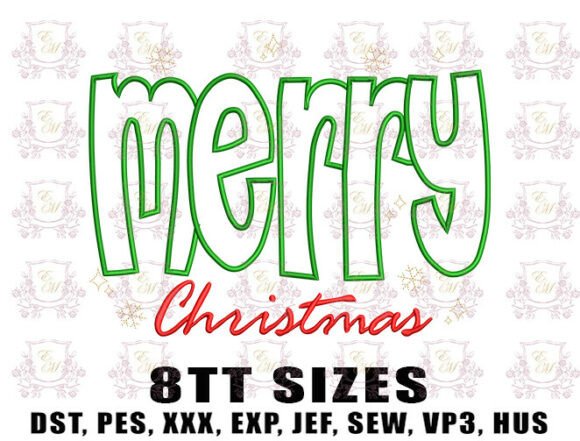
When evaluating Merry Christmas embroidery files, it is crucial to distinguish between true vintage digitization and simple font conversion. A genuine vintage style design utilizes specific stitch types to replicate the fluidity of hand-penmanship. The curl-font aesthetic relies heavily on satin stitches with variable widths to create the illusion of ink pressure or brush strokes. This technique adds dimension and elegance that flat run stitches cannot achieve.
Professionals and educators in the textile arts understand that the integrity of a curl-font design depends on proper underlay. Without adequate center-run or edge-run underlay, the elegant loops and swashes characteristic of vintage typography can distort on fabric. High-quality files account for fabric stretch and pull compensation, ensuring that the "Merry" and "Christmas" words maintain their graceful curvature even after washing. When sourcing these files, examining the stitch-out preview for smooth transitions and consistent density is a primary indicator of professional digitizing standards.
Technical Considerations for Apparel Integration
Applying vintage typography to wearable items presents unique challenges compared to home decor. Sweaters, shirts, and jackets have varying degrees of elasticity and texture. The elegant touch of a curl-font design can be lost if the stabilizer choice does not match the garment's weight. For knit sweaters, which are a popular canvas for holiday apparel, using a cut-away stabilizer is often necessary to prevent the intricate curls from sinking into the yarn.
Furthermore, placement is critical when working with Merry Christmas embroidery files on clothing. On a jacket yoke or sweater chest, the design must be centered relative to the wearer’s body, not just the garment seams. Because vintage scripts are often asymmetrical due to their artistic flourishes, visual centering takes precedence over mathematical centering. Hooping techniques also play a role; floating the garment with adhesive spray and a sticky-back stabilizer can prevent hoop burn on delicate velvet or cashmere blends while maintaining the tension required for crisp lettering.
Transforming Home Textiles into Festive Heirlooms
Beyond apparel, the application of vintage embroidery extends significantly into home textiles. Holiday pillows, table runners, and stockings serve as foundational elements of seasonal interior design. The advantage of using machine embroidery for these items lies in the ability to customize scale and color to match existing decor schemes. A vintage curl-font design offers versatility; it reads as sophisticated in monochromatic white-on-linen for a farmhouse aesthetic, or vibrant in metallic gold on deep red velvet for a traditional Victorian look.
- Holiday Pillows: When embroidering pillow covers, consider the seam allowance and zipper placement. Vintage designs often have wide horizontal spans; rotating the design 90 degrees or splitting the file may be necessary for smaller hoop sizes without compromising the flow of the script.
- Table Linens: Table runners and napkins require designs that lie flat to avoid interfering with place settings. Low-profile vintage fonts with minimal jump stitches are ideal here to prevent snagging on silverware or glassware.
- Stockings: The cuff of a stocking provides a stable area for detailed work. However, because stockings are often made of thick felt or wool, topping should be used to keep the curl details visible above the fabric nap.
Color Theory and Thread Selection for Vintage Appeal
The perception of "vintage" is as much about color as it is about shape. While the digitized file dictates the stitch path, the thread selection defines the era. To bring festive cheer with an authentic antique feel, creators should move beyond standard primary colors. Variegated threads can mimic the shading found in aged signage, while matte-finish cotton threads offer a softer, more historical appearance than high-sheen rayon or polyester.
For those creating personalized handmade Christmas gifts, coordinating thread color with the recipient's home palette demonstrates thoughtful craftsmanship. A deep forest green curl-font on cream linen suggests mid-century modern sensibilities, whereas sepia-toned thread on unbleached muslin evokes colonial revival styles. Understanding these color associations allows the embroiderer to leverage Merry Christmas embroidery files as a flexible design tool rather than a static graphic.
Commercial Viability and Personalized Gifting
For small business owners and makers selling at holiday markets or online, vintage embroidery designs occupy a lucrative niche. Consumers frequently associate cursive, ornate typography with higher value and artisanal quality compared to printed alternatives. Offering customization within this vintage framework—such as adding a family name beneath the main "Merry Christmas" text in a complementary, simpler font—can significantly increase perceived value.
However, commercial use requires strict adherence to licensing terms associated with digital files. Many designers license Merry Christmas embroidery files for personal use only, requiring a separate commercial license for selling finished goods. Professionals must verify these rights before listing products. Additionally, production efficiency matters. Vintage curl-fonts with excessive jump stitches can slow down production times. Optimizing the stitch order or choosing files specifically digitized for production environments ensures that the elegance of the design does not come at the cost of profitability.
Gift Personalization Strategies
Personalized handmade Christmas gifts carry emotional weight that mass-produced items cannot replicate. When utilizing vintage embroidery for gifting, the goal is to integrate the recipient's identity seamlessly into the festive motif. Rather than simply appending a name, consider how the vintage design interacts with personalization elements.
- Monogram Integration: Nestling a single initial within the swirls of the vintage script creates a cohesive unit rather than two disparate elements.
- Date Commemoration: Adding a year in a small, understated serif font below the main design can mark a first Christmas in a new home or a milestone anniversary.
- Material Pairing: Matching the gift item to the recipient’s lifestyle enhances the utility of the vintage aesthetic. A vintage-embroidered apron for a baker or a tool roll for a crafter merges function with festive tradition.
Maintenance and Longevity of Embroidered Treasures
Creating unique handmade Christmas treasures involves a responsibility to ensure their longevity. Vintage style embroidery, particularly intricate curl-fonts, requires specific care instructions to maintain its elegant touch over decades. The dense satin stitches used to create the script are susceptible to abrasion and heat damage.
Educators and experienced stitchers recommend advising recipients or customers to wash embroidered items inside out in cool water. Heat is the enemy of synthetic threads commonly used in machine embroidery; air drying or tumble drying on low heat prevents the curls from melting or flattening. For heirloom pieces like table linens that may be stored for eleven months of the year, acid-free tissue paper should be used to cushion the embroidery, preventing permanent creases through the dense stitch areas. Proper care ensures that the festive cheer brought by these designs endures for future generations.
Troubleshooting Common Vintage Stitch Challenges
Even with premium Merry Christmas embroidery files, technical issues can arise during the stitching process. Registration errors, where the outline does not align with the fill, are particularly noticeable in fine script work. This is often caused by inadequate hooping tension or improper stabilizer layering. Re-hooping with greater attention to grainline alignment frequently resolves this issue.
Another common challenge is thread breaks in tight curves. Vintage fonts often contain sharp directional changes that stress the thread. Adjusting the machine’s speed for complex sections or using a larger needle size can reduce friction. Sometimes, the issue lies in the file itself; if breaks persist across multiple machines and setups, the digitizer may not have optimized the stitch angles for the curve radius. Recognizing when a problem is mechanical versus digital saves time and materials, allowing creators to focus on bringing their festive vision to life.
Selecting the Right File Format and Compatibility
The practical application of any embroidery design begins with format compatibility. Merry Christmas embroidery files are typically available in industry-standard formats such as PES, DST, JEF, and VP3. However, not all formats retain the same metadata. Some formats preserve color information and stitch grouping better than others. When transferring vintage designs between machines or software, choosing a format that supports rich data helps maintain the designer’s original intent.
For those using multi-needle machines versus single-needle domestic models, the file structure may need adjustment. Multi-needle machines handle color changes differently, and optimizing the color sort order can reduce unnecessary trims and jumps. Hobbyists upgrading their equipment should test vintage files on scrap fabric first, as the increased speed and tension of newer machines may interact differently with older digitized designs. Continuous learning and adaptation remain central to mastering the art of vintage machine embroidery.